


If rocks could talk, the Black Hills would have stories to last centuries. They’ve witnessed gold rushes, formed glittering crystals, and created treasures you’ll spot in museums, shops, and sometimes even trail sides. Rapid City is your front-row seat to this geologic show.
What is a mineral, a rock and a gemstone?
- Mineral: A naturally occurring, inorganic substance with a consistent chemical makeup, such as quartz or feldspar.
- Rock: A mix of minerals, like granite, that forms the hills and outcrops you see.
- Gemstone: A mineral or rock prized for beauty and durability once cut and polished.
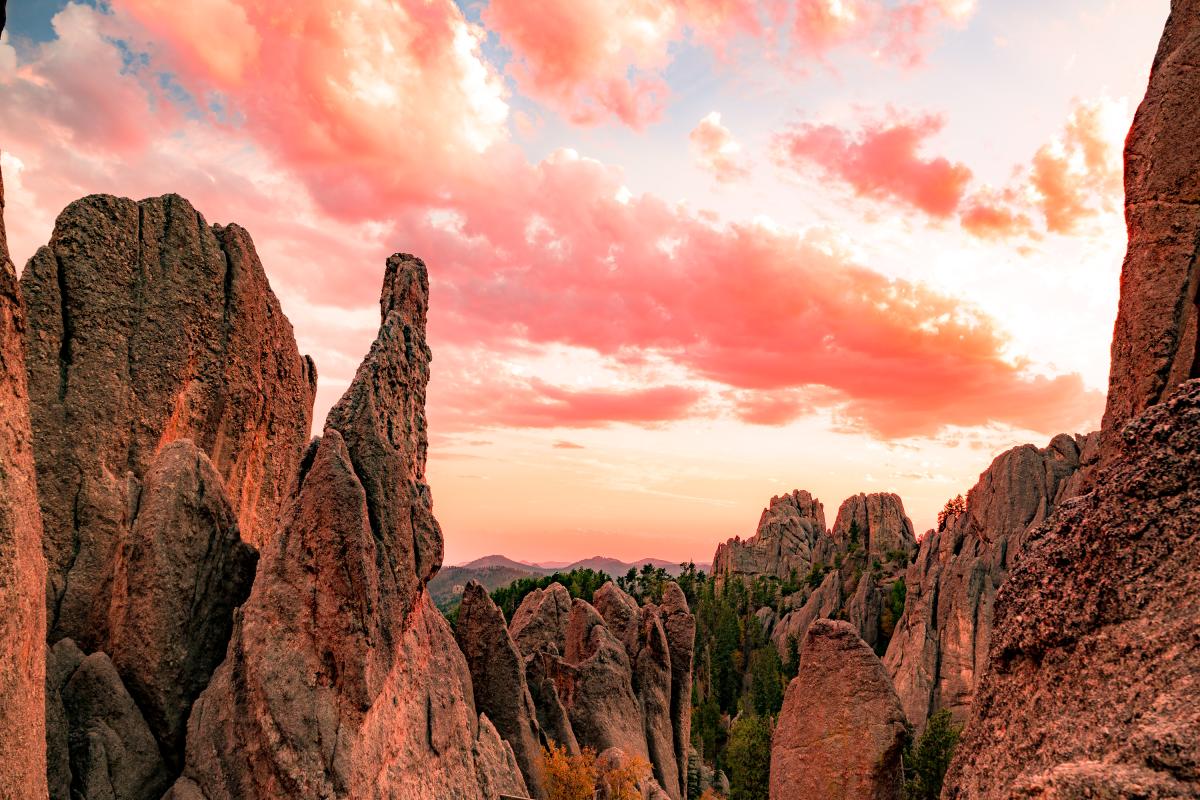
Why the Black Hills are Special
The Black Hills are like nature’s treasure chest. Ancient granite and pegmatite bodies cooled here just right, concentrating elements that formed crystals, agates and minerals now studied around the world. Gold made history in these hills, but today visitors come to see the full spectrum of geology in all its color and sparkle. It can be tempting to pocket every treasure, but part of the magic is knowing when to take something home and when to simply enjoy the moment.
Notable Finds in the Area
- Fairburn Agate: South Dakota’s state gemstone, a banded agate known for bold, nested patterns. Often associated with the prairie east and south of the Black Hills.
- Rose Quartz: The state mineral, blush-pink quartz is common in the southern Black Hills near Custer.
- Smoky Quartz: Gray to nearly black quartz crystals that form in pockets within granite.
- Beryl: The mineral family behind aquamarine and emerald. Transparent gem quality is rare, but specimens occur in local pegmatites.
- Tourmaline and Garnet: Typically small but eye-catching, found in some pegmatite zones.
- Mica and Feldspar: Abundant rock-forming minerals that teach the basics of luster, cleavage, and hardness.
- Gold: Best understood through exhibits and history sites rather than field collecting.
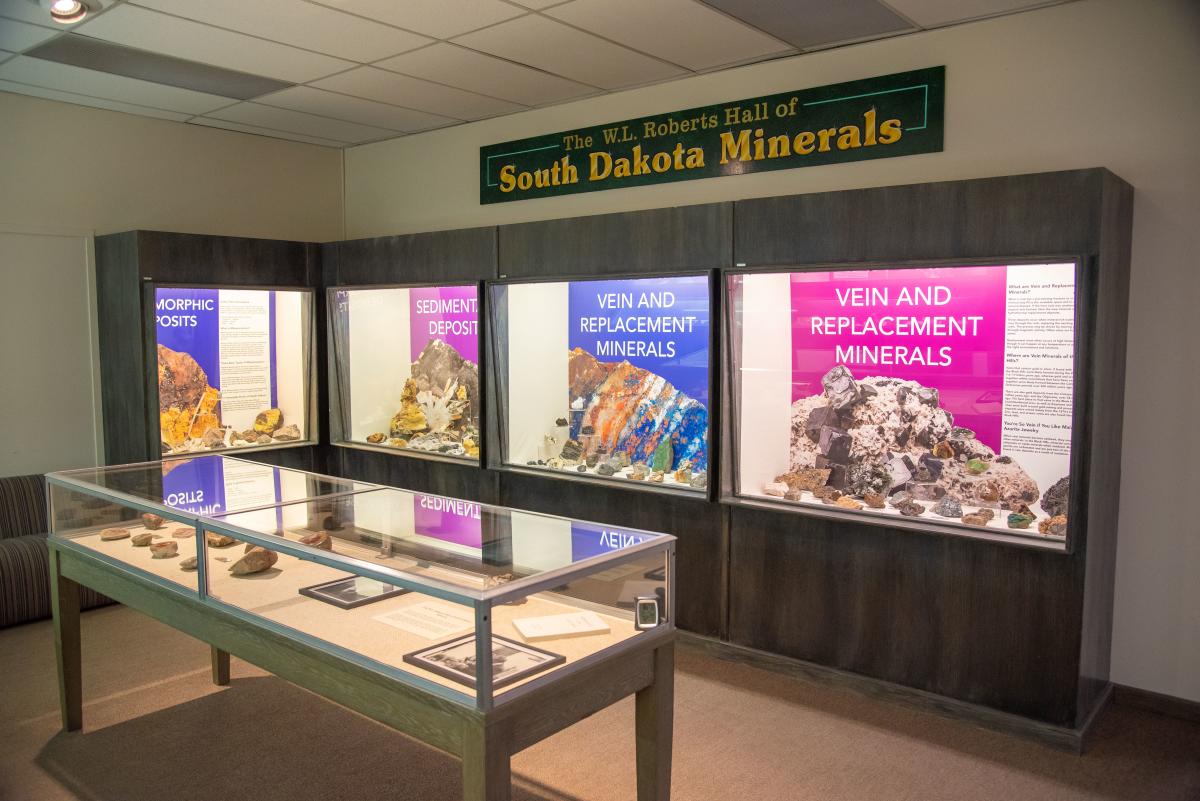
Where to See Them
- Museum of Geology at South Dakota Mines: South Dakota’s official mineral collection, with Fairburn agates, rose quartz, a fluorescent mineral room and fossils from the region.
- The Journey Museum: Connects local geology to Native history and settlement.
- Rock shops and galleries across the Black Hills: Find polished agates, rose quartz and educational starter kits.
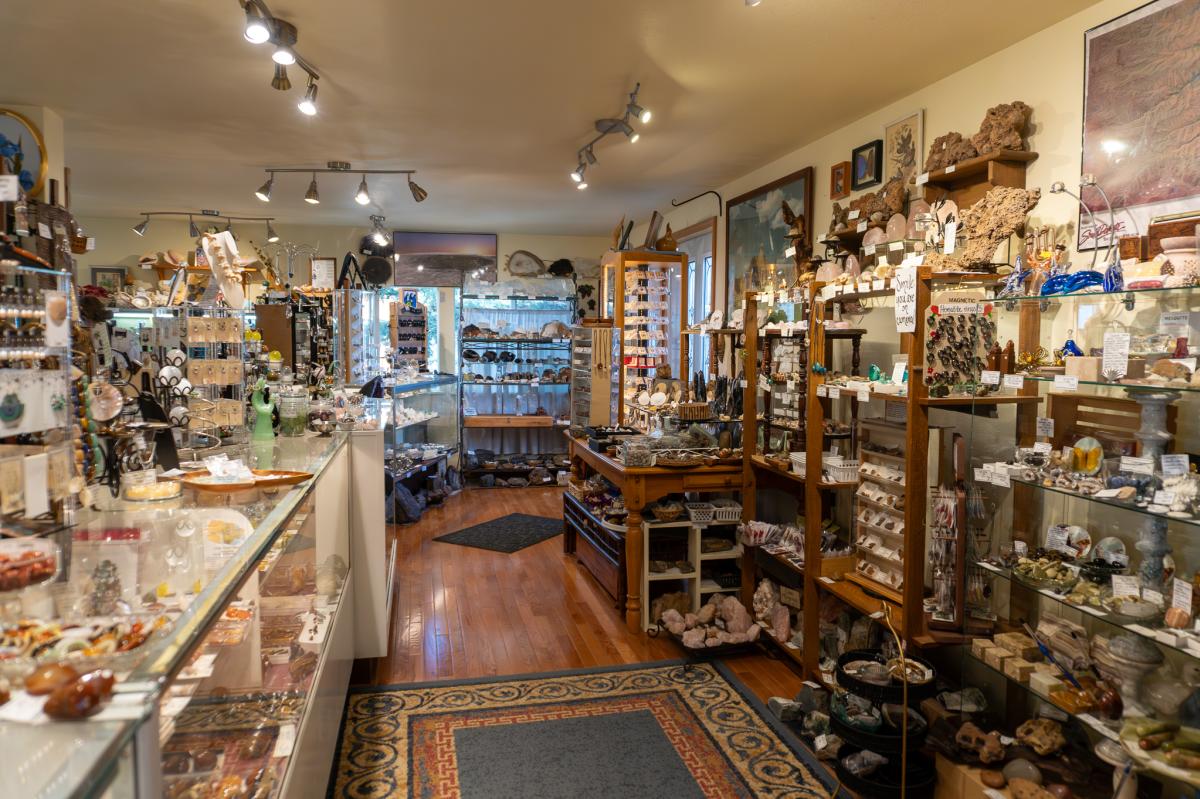
Where to Shop for Rocks in Rapid City
If you want to take home a piece of the Black Hills, Rapid City has a few standout rock shops:
- Indigo Iris Rocks and Stones | 7275 Mount Rushmore Road
- Reptile Gardens Gift Shop | 8955 US Highway 16
- Dinosaur Park Gift Shop | 940 Skyline Drive
- Mystic Market | 412 Oshkosh Street
- Rock It Away Crystal & Gift Shop | 2200 N Maple Ave (Weekend-only shop inside Traders Market at Uptown Rapid)
- Black Hills Caverns & Rock Shop | 2600 Cavern Road
You’ll also find rock shops scattered across other Black Hills communities — from Custer to Deadwood — each with their own local specialties and treasures.
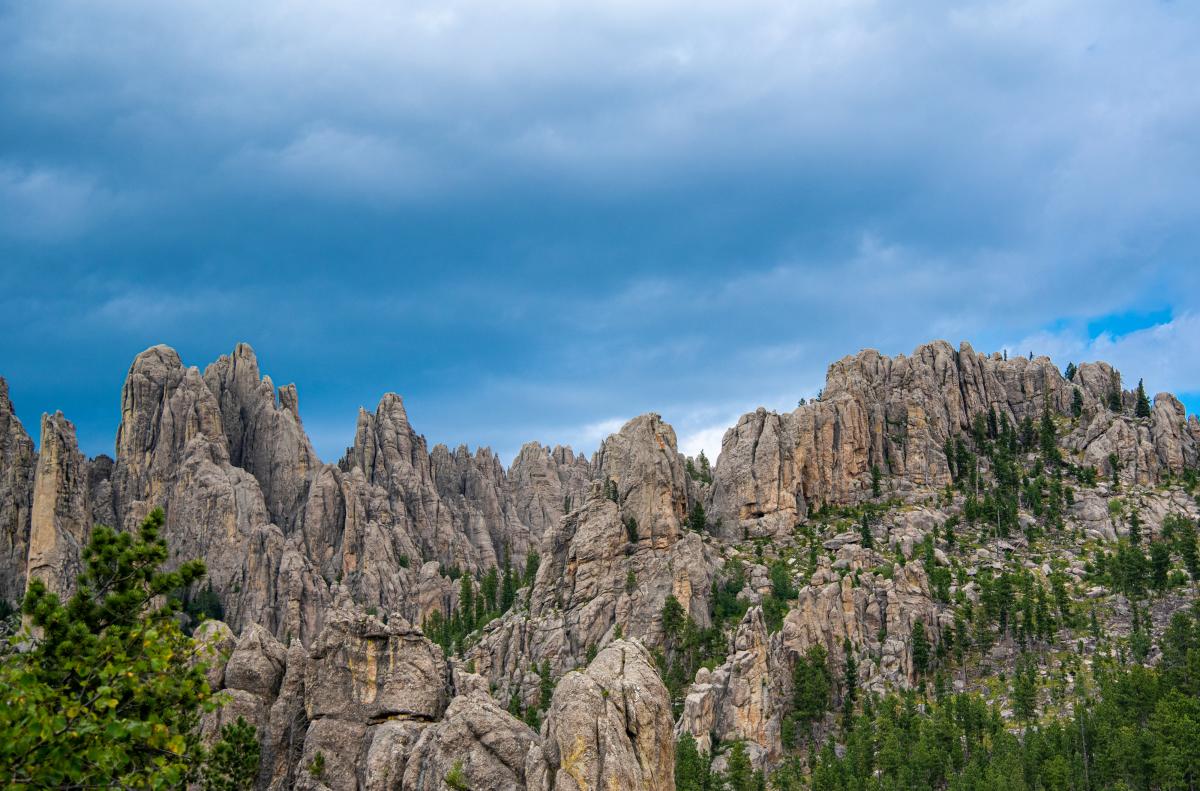
Pro-Tips to Keep Nature Natural
- Gathering non-commercial amounts of natural objects is usually allowed on public lands but check with the local land manager to learn about exceptions and brush up on Forest Service guidelines for rockhounding.
- Avoid active mining claims and heritage sites and help keep history alive by never moving or taking artifacts.
- If you find any neat rocks or gemstones, be thoughtful about how much you take with you, and consider taking a picture and leaving it behind for the next person to discover.
- Be mindful that rocks are habitats for insects, birds, rodents and snakes, so be careful, and try to avoid disturbing the natural environment as much as possible.
Plan Your Mineral-Minded Visit
Start at a museum in Rapid City to get oriented, then explore the Black Hills on scenic drives and hikes. Time your trip with a future gem and mineral show for vendor talks and kid-friendly activities. Round out the day with a local shop stop to bring a small piece of Black Hills geology home!