


There are landscapes that make an impression, and then there are landscapes that make you wonder how they got here in the first place.
Drive about an hour east of Rapid City and the rolling prairie suddenly breaks apart. Jagged pinnacles rise from the earth. Deep canyons cut through bands of red, gold, gray, and white. Grasslands stretch toward a horizon that feels impossibly far away. This is Badlands National Park, and while its formations are unlike almost anything else in South Dakota, the story of this place reaches far beyond what you can see from an overlook.
The Badlands hold millions of years of geological history and evidence of people traveling, hunting, gathering, and living within this landscape for more than 12,000 years. For the Lakota, whose connection to this land continues today, these formations carry cultural, historical, and spiritual significance that deserves to be understood alongside their natural beauty.
This is not simply a landscape to drive through. It is a place to slow down, look closer, and understand more deeply.
A Name That Goes Back Generations
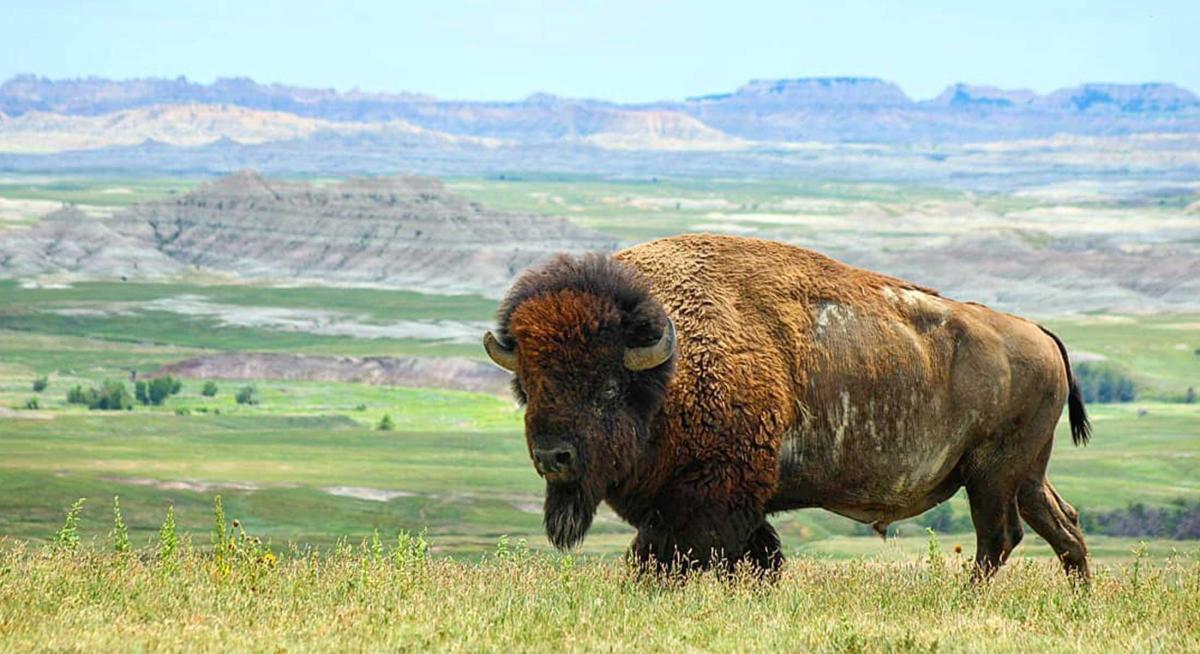
Long before this landscape became a national park, the Lakota called the area mako sica, commonly translated as “bad lands.” Early French fur trappers later used les mauvaises terres à traverser, meaning “bad lands to travel across.” The name makes sense when you imagine crossing this country without a paved road beneath you. Steep formations make travel difficult, water can be scarce, summers are hot, winters are bitterly cold, and rain can turn the clay-rich ground slick and nearly impassable.
But “bad” should never be mistaken for empty or unimportant.
Archaeological sites within Badlands National Park show human presence stretching back more than 12,000 years. More than 300 archaeological sites have been documented within the park, including ancient campsites, stone-working areas, and places where bison were butchered. Evidence points to generations of people using this landscape seasonally for hunting and other purposes rather than establishing permanent settlements within its rugged interior. Archaeological evidence connects the area to multiple peoples over time, including the Arikara and, more recently, the Oglala Lakota.
More Than a Landscape
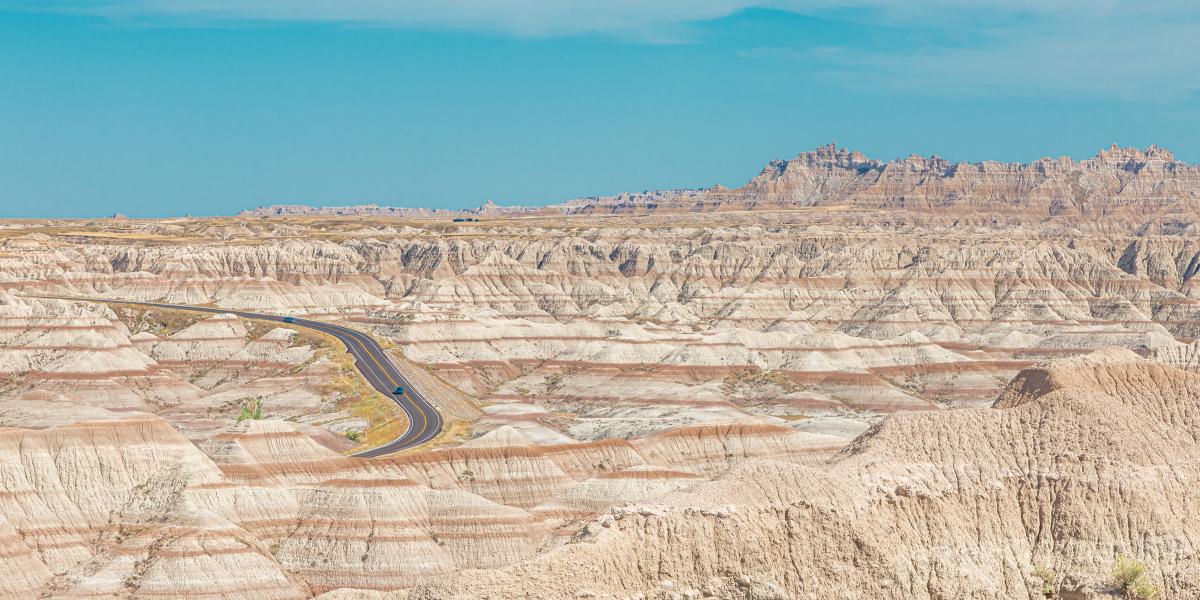
The Badlands are inseparable from the history of the Lakota people.
By the 1700s, the Oglala Lakota were established in the region, moving across the Great Plains and building a way of life closely connected to the bison. Bison provided food and materials for clothing, shelter, tools, and other necessities, while also holding profound spiritual importance within Lakota culture. That relationship continues today.
The land itself served many purposes. Historical research documented by the National Park Service describes Lakota use of the Badlands for hunting, gathering plants and foods, burials, ceremonies, vision quests, travel, and refuge. In other words, this was never an empty stretch of inhospitable country. It was part of a larger cultural landscape.
One of the most significant chapters in that history unfolded at Stronghold Table, within what is now the South Unit of Badlands National Park.
In 1890, amid increasing pressure from the U.S. government and the devastating transformation of Lakota life across the Plains, thousands of Lakota gathered in the Badlands as the Ghost Dance movement spread through Native communities. Stronghold Table became a place of refuge and ceremony, and it was the site of one of the last known Ghost Dances. The events of that winter unfolded shortly before the Wounded Knee Massacre on Dec. 29, 1890.
That history is not distant from the landscape visitors experience today.
The park's South Unit, also called the Stronghold District, lies within the Pine Ridge Indian Reservation. Its 133,300 acres are owned by the Oglala Sioux Tribe and managed by the National Park Service through an agreement with the Tribe. The National Park Service describes the area as a landscape of great historical and spiritual significance to the Oglala Lakota.
Its history also continued well into the 20th century. During World War II, the federal government took more than 340,000 acres from the Pine Ridge Indian Reservation to establish an aerial gunnery range. Oglala Lakota families living there were forced to leave, sometimes with little notice, adding another difficult chapter to the history carried within this land.
Understanding these stories changes the way you see the Badlands. What first appears to be an untouched wilderness becomes something much richer: a landscape that has witnessed movement, survival, ceremony, loss, and resilience for generations.
Millions of Years Written in Stone
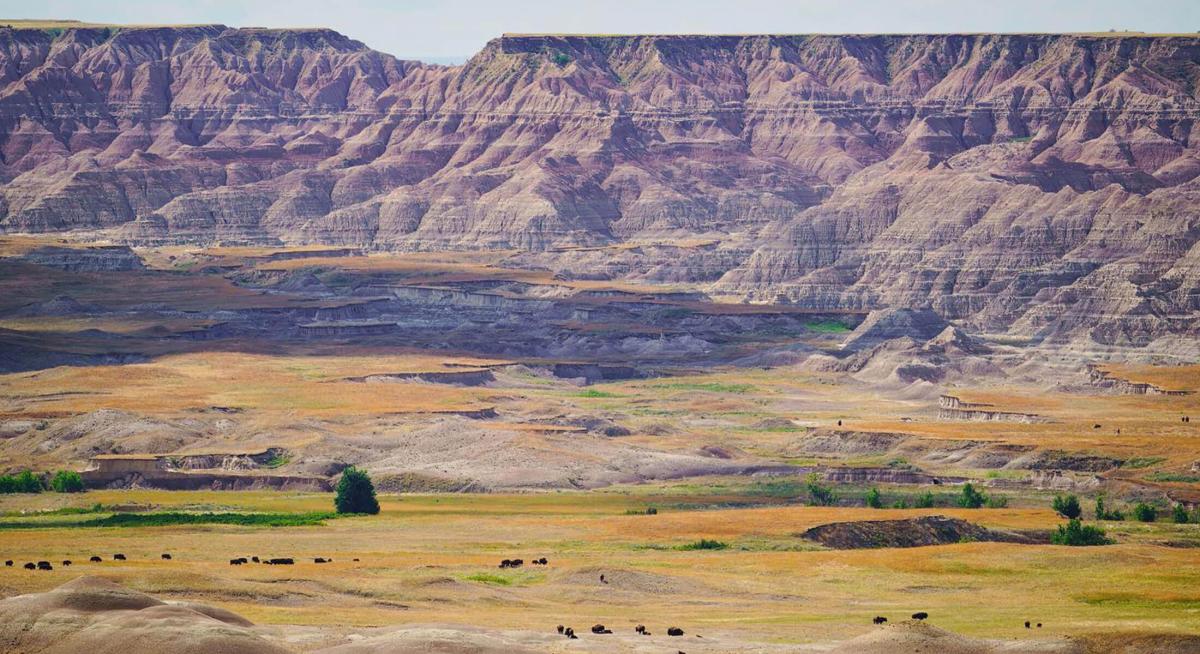
Human history is only one layer of the Badlands story.
The formations themselves began taking shape tens of millions of years ago as layers of sediment accumulated across ancient environments. Deposition began roughly 75 million years ago, and the youngest major rock layers were deposited about 28 million years ago. Much later, erosion began cutting into those layers, creating the buttes, pinnacles, gullies, and ridgelines we recognize today. That process continues every time wind and water reshape the soft rock.
Those exposed layers have also preserved one of the world's richest fossil records. Ancient mammals, including relatives of horses and rhinoceroses, once roamed landscapes dramatically different from today's mixed-grass prairie. Their fossils remain locked within the formations until erosion gradually brings them back to the surface.
Standing at an overlook, you are essentially looking across chapters of Earth's history stacked one above another.
Finding Your Way Through the Badlands
One of the best things about Badlands National Park is that you do not need an ambitious hiking itinerary to experience it.
Badlands Loop Road carries you through some of the park's most dramatic scenery, with overlooks appearing around bend after bend. Take your time. The formations constantly change depending on your perspective and the light, and a view that feels enormous at one stop can look completely different several miles down the road.
If you want to trade the windshield for a trail, the park offers everything from short walks to more challenging hikes. The popular Notch Trail leads into the formations themselves, while other trails offer easier introductions to the landscape. Badlands National Park also has an open-hike policy in many areas, allowing visitors to explore beyond established trails. Check current National Park Service guidance before setting out, carry plenty of water, and remember that cell service can be limited.
Wildlife adds another layer to the experience. Bison once again roam this prairie after being reintroduced to the park in 1963, alongside bighorn sheep, prairie dogs, coyotes, birds, reptiles, and the endangered black-footed ferret. The return of bison is especially meaningful in a place where the animal has held such deep ecological and cultural importance for generations. Today, the park also works with Tribal nations to transfer bison from the Badlands herd to support conservation herds and traditional uses on Native lands.
Give every wild animal plenty of room. Bison, in particular, are powerful and unpredictable.
Protecting a Landscape That Carries Meaning
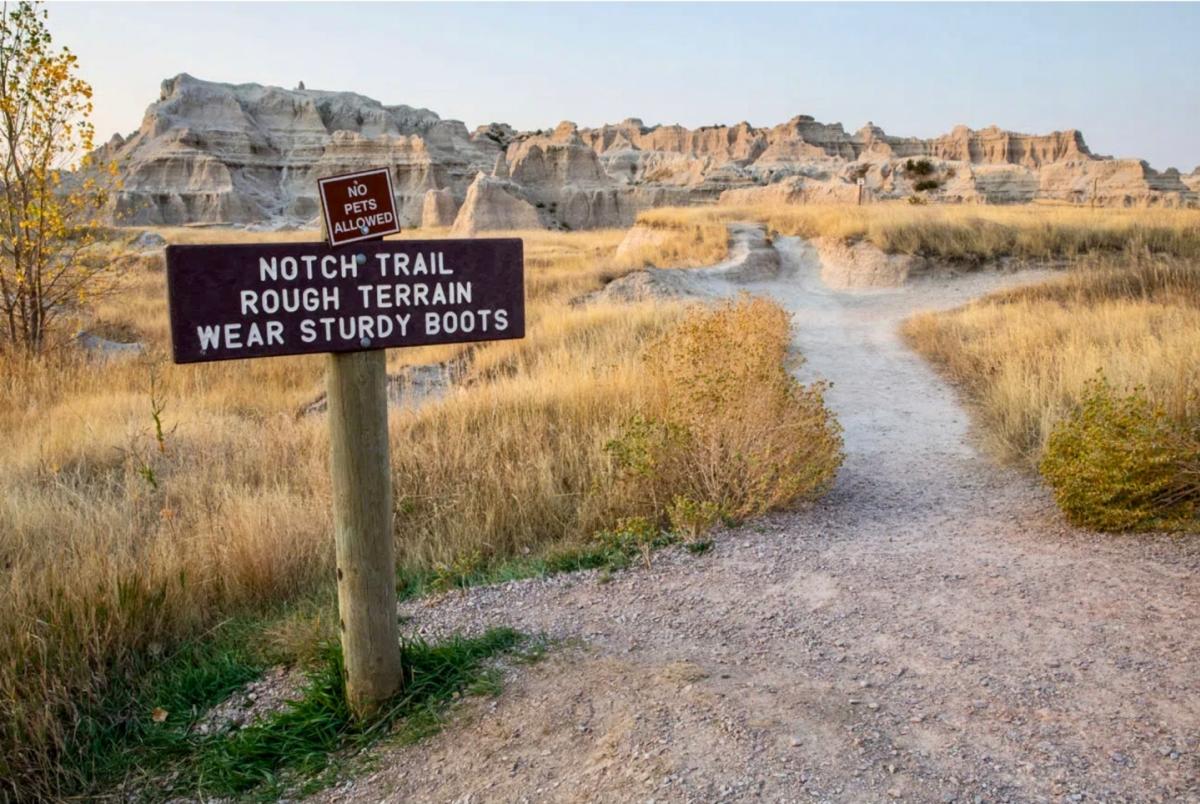
The Badlands ask something of every visitor who comes here: experience them fully, but leave them as you found them.
Through Forever 605, we encourage travelers to explore western South Dakota with intention, respect the cultures connected to these lands, and make thoughtful choices that help protect them for generations to come. That responsibility carries even more weight in a place like the Badlands, where the landscape holds deep cultural and spiritual significance for the Lakota people.
Protecting this place starts with simple actions. Stay on designated trails where required to protect fragile plants, soils, and culturally significant areas. Pack out everything you bring with you. Leave rocks, fossils, plants, and other natural features where you find them, and never disturb historic, archaeological, or ceremonial items. Give wildlife plenty of space, and remember that the quiet you find here may be part of someone else’s opportunity for reflection and connection.
Just as important is taking time to understand the land beyond its scenery. Learn the stories of the people who have lived with and cared for this landscape across generations. Approach culturally significant places with respect. Recognize that the history of the Badlands did not end when park boundaries were drawn, and its relationship with Indigenous communities remains very much alive today.
The formations of Mako Sica have endured wind, water, and time for millions of years. Our role is much simpler: travel thoughtfully, tread lightly, and help ensure the stories, wildlife, and remarkable landscapes found here remain for those who come next.
That is the promise behind Forever 605.
Stay for the Light
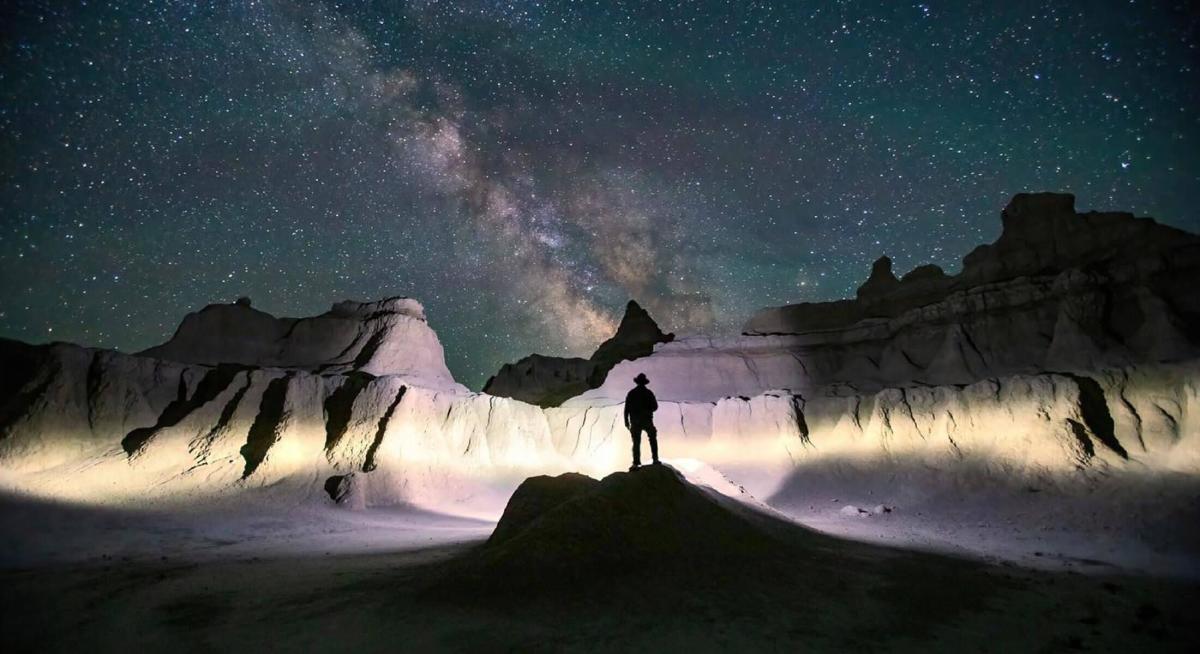
The Badlands do not look the same twice.
Arrive near sunrise and the first light catches individual ridges while valleys remain in shadow. Stay through sunset and those pale formations can suddenly glow with shades of pink, orange, and red. After dark, the distance from major sources of light opens the sky overhead.
It is tempting to race through the park, collect a few overlooks, and continue down the highway. Give yourself more time than that.
Stop at the Ben Reifel Visitor Center. Learn what those colored layers represent. Look at the fossils. Ask about the people who have moved through this country for thousands of years. Then head back outside and look at the landscape again.
Because once you understand even a little of what has happened here, the Badlands become something more than spectacular scenery. They become a story written across stone, prairie, and generations.
And from Rapid City, that story is only about an hour down the road.